

On the occasion of the Agrivoltaic banquet promoted by AIAS, Italian Sustainable Agrivoltaic Association, Lorenza Panunzi visited one of the first agrivoltaic plants built in Italy: the Turned Vineyard. A project that combines organic viticulture, energy production and scientific research.
A pioneering system that stands the test of time
The Vigna Svolta is located in the Murge area of Bari, in a hilly area often affected by long periods of drought and adverse weather conditions. It is here that, over fifteen years ago, it was installed one of the first Italian agrivoltaic systems.
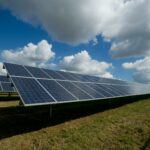
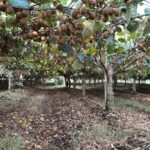
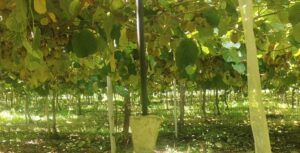
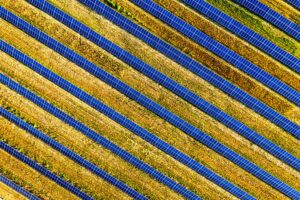
It is a structure with fixed panels – therefore without solar tracking systems – built directly above the rows of an organic vineyard Built on previously abandoned land. The chosen configuration reflects a clear vision: using solar energy not only to produce electricity, but also for promote agricultural and environmental regeneration.
Scientific research and continuous monitoring
Plant management is now part of a experimental project coordinated by Professor Giuseppe Ferrara of the Department of Soil, Plant and Food Sciences of the University of Bari, which has activated a monitoring program on the main agronomic and microclimatic parameters.
The data collected so far show a significant reduction in soil and air temperatures under the panels: up to 3 degrees less at ground level and 2 degrees in the surrounding atmosphere. This temperature drop causes a lower evapotranspiration by plants, a fundamental factor in an area where water resources are limited.
To better manage the available water, the company has created rainwater collection tanksThanks to the cooler microclimate and the soil's ability to retain moisture, production can be maintained even during the hottest months, when vines grown outdoors would suffer greatly.

Reduced production and adaptation in progress
Continuous shading causes a slight decrease in the quantity of grapes produced. However, the company has adopted a qualitative compensation strategyGrapes from covered rows are blended with those from unshaded areas to balance out any organoleptic differences.
Furthermore, trials are underway with varieties more suited to growing in the shade, such as Traminer and Primitivo, to better understand the potential for adaptation of the vine to low light conditionsThe project doesn't simply "tolerate" shading, but seeks to transform it into an opportunity for diversification and innovation.
More life in the vineyards
One of the most interesting effects observed so far is the improving biodiversityThe more stable microclimatic conditions seem to favor the presence of beneficial insects and pollinators, making the plant not only a productive space, but also a more welcoming habitat for the local faunaThis aspect, often underestimated, demonstrates how a well-designed agrivoltaic system can also contribute to ecological quality of the agricultural landscape.
A concrete experience to learn from
The visit to Vigna Svolta was an opportunity to closely observe an agrivoltaic model that isn't just theoretical, but alive, functioning, and constantly monitored. In an era where climate adaptation is no longer a choice but a necessity, experiences like this point to a possible direction for the agriculture of the futureA direction made of experimentation, data and coexistence between crops and infrastructures.