

How to measure the effectiveness of public policies to support organic farming? And how can satellite data help administrations evaluate the results of interventions and to improve the support tools for farmers?
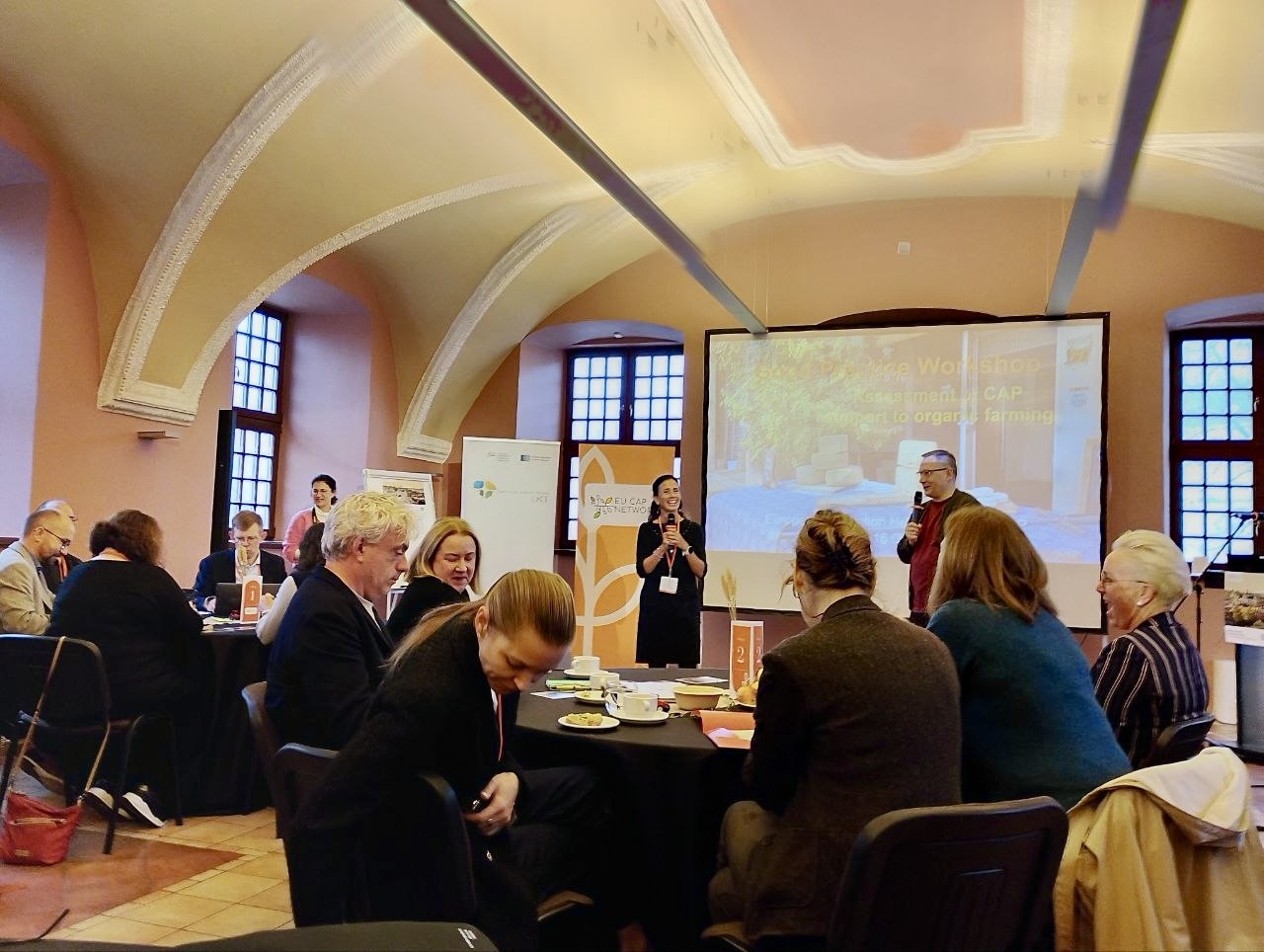
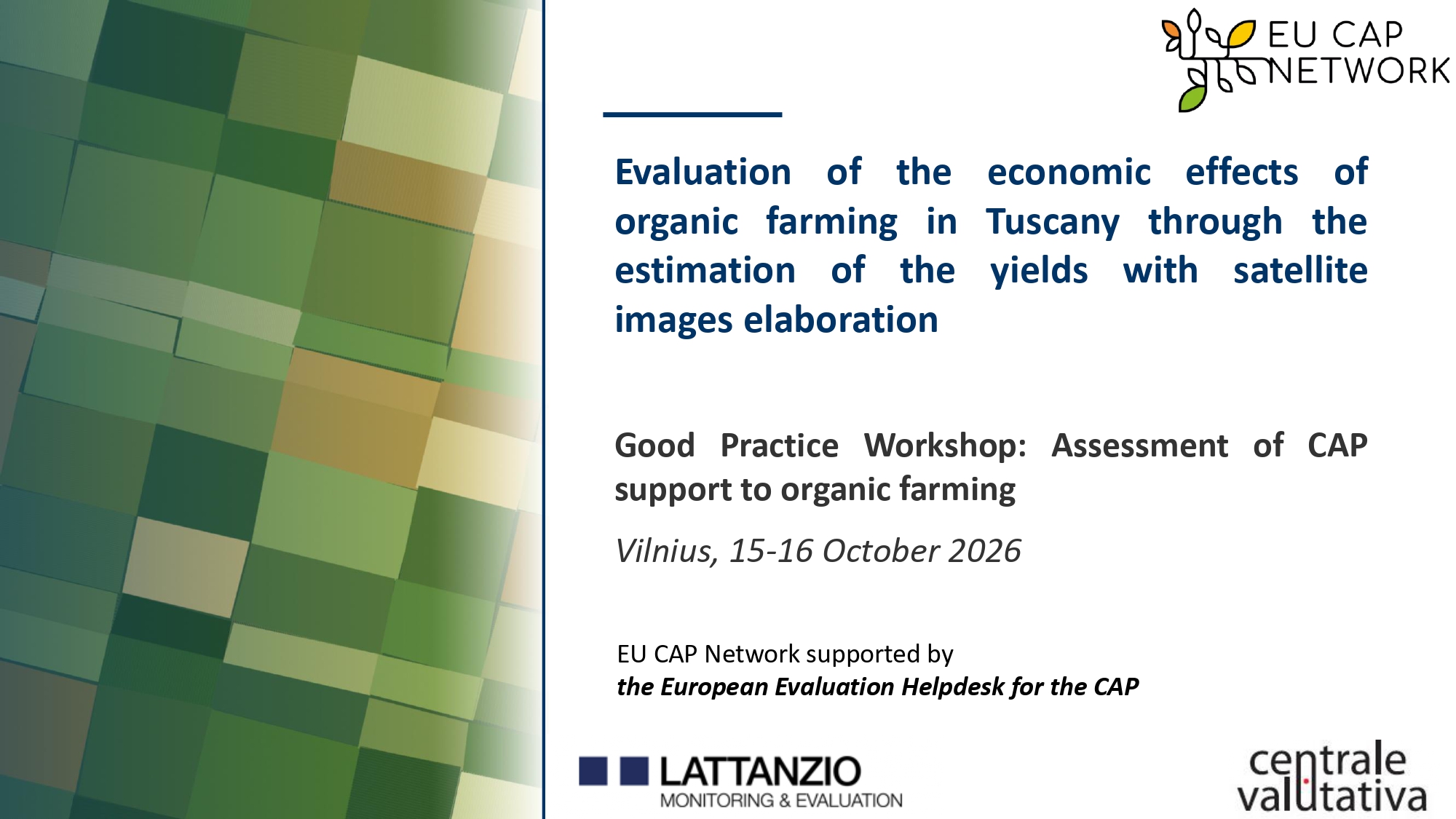
These are some of the issues addressed in Vilnius, The October 15 and 16, 2026, during the “Good Practice Workshop “Assessment of CAP support to organic farming”, organised within the EU CAP Network with the support of the European Evaluation Helpdesk for the CAP.
The meeting was attended by Dr. Matteo De Sanctis, who presented a case study developed through TETHYS in the context of the evaluation of the Rural Development Program of the Tuscany Region, showing how Earth observation technologies can contribute to measuring the economic effects of agricultural policies and to supporting public administration decisions.
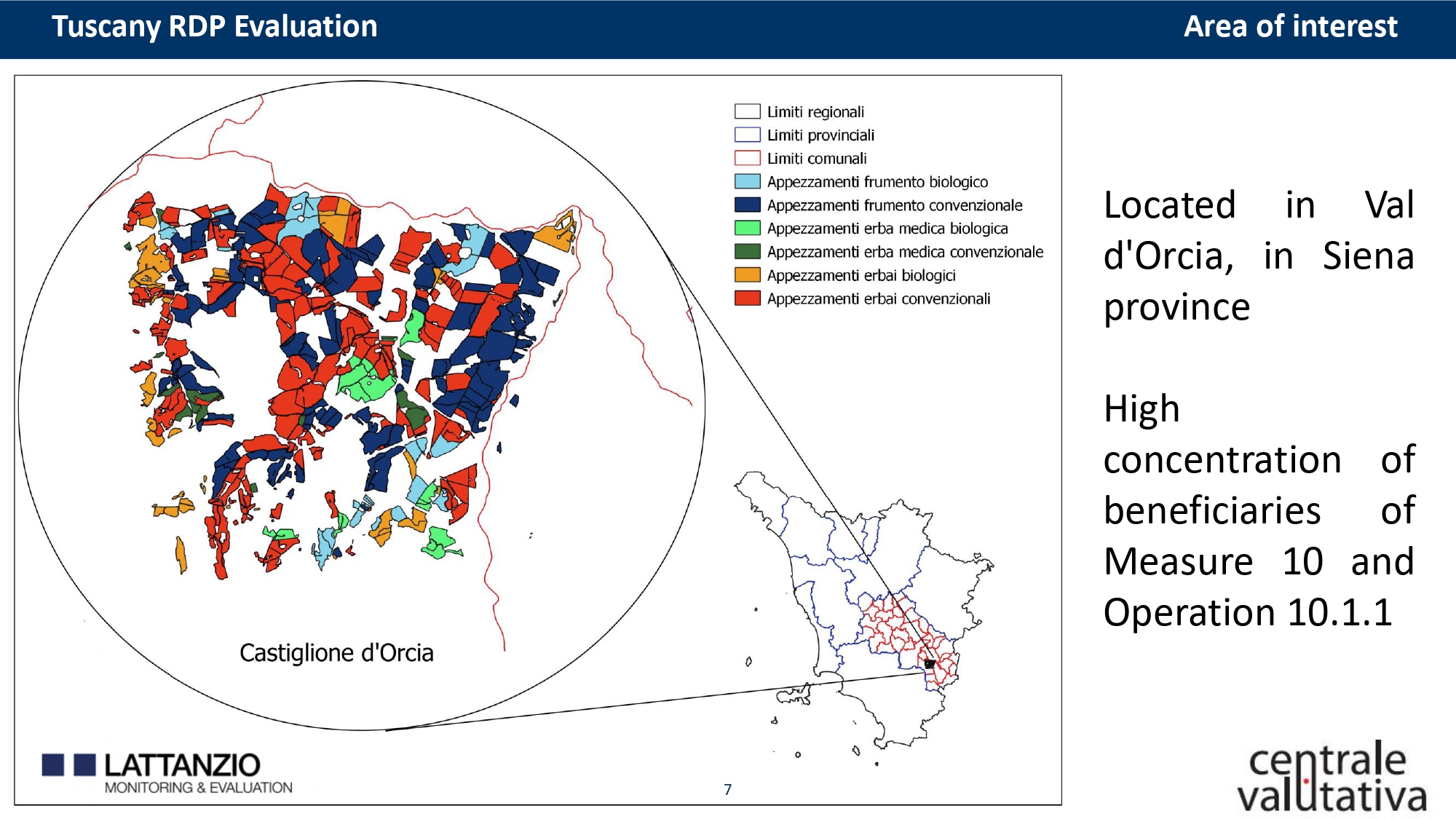
Organic and conventional farming: a comparison begins in Val d'Orcia.
The project presented in Vilnius was born from a’evaluation activities of the economic effects of organic production, carried out as part of the evaluation service of the Rural Development Programme of Tuscany 2014-2022.
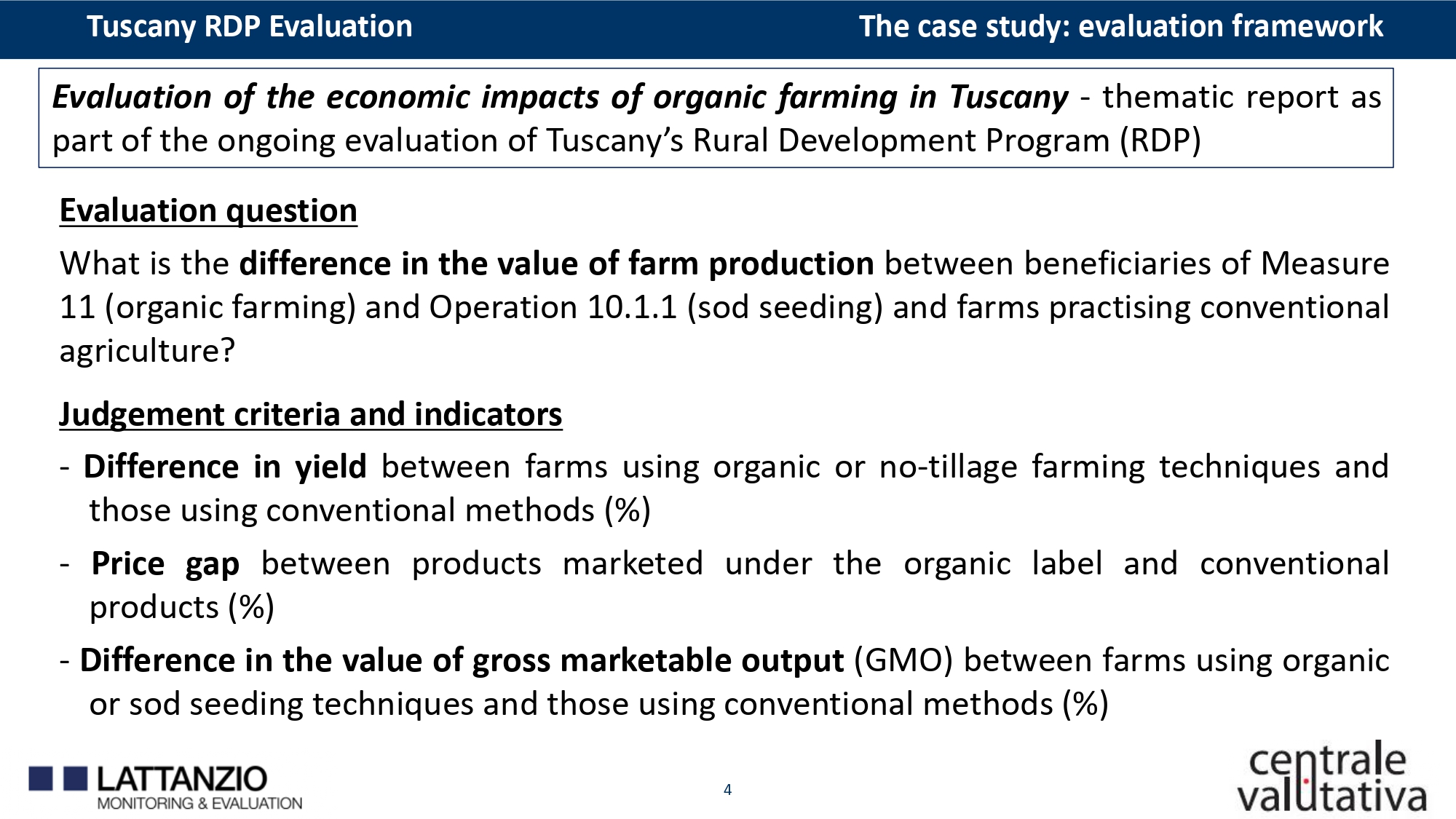
The objective was to compare the production value of farms benefiting from interventions dedicated to organic and conservative agriculture with that of farms adopting conventional techniques, analyzing three key indicators: differences in agricultural yields, market prices and the value of gross marketable production.
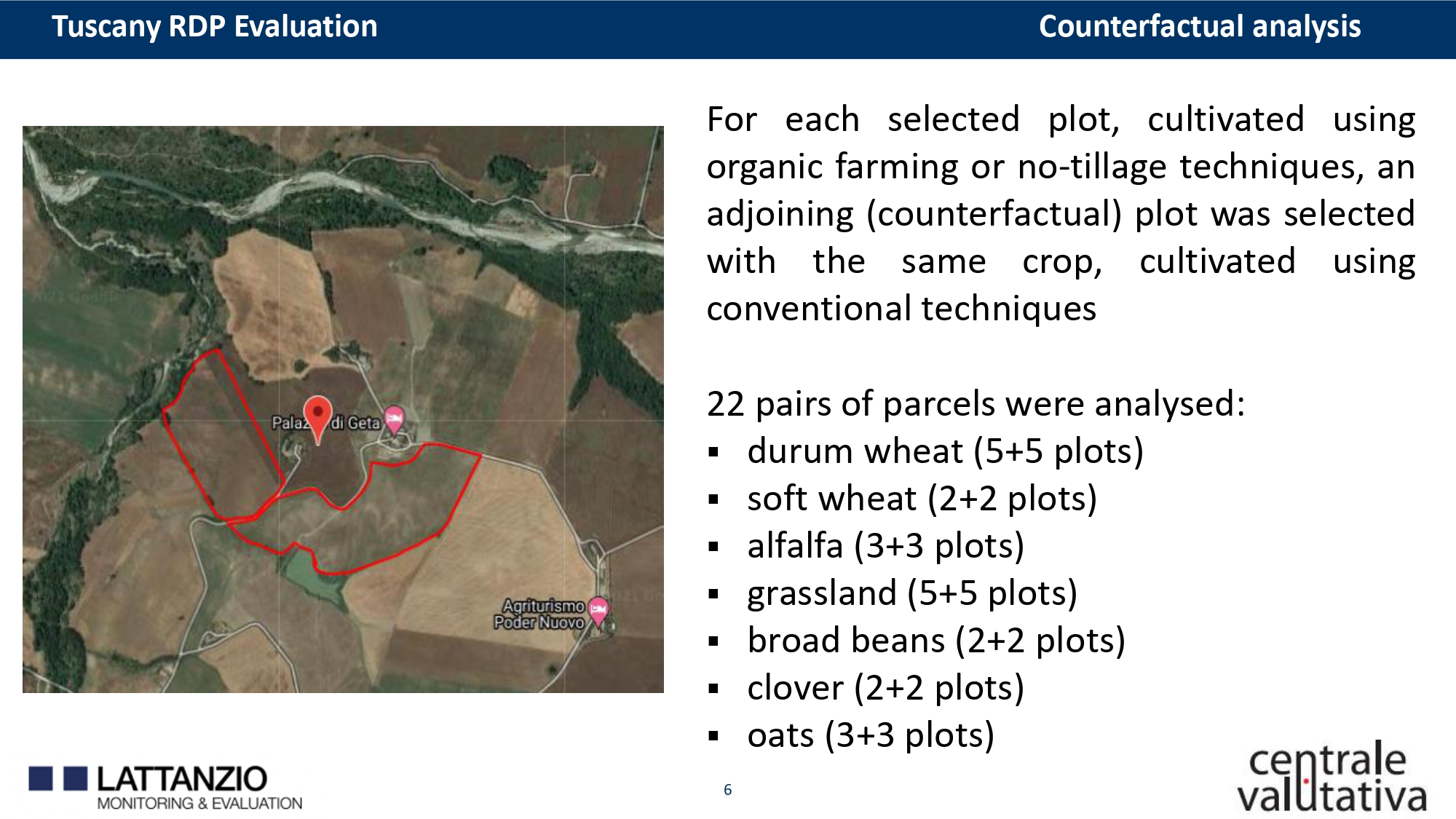
The analysis focused on the Val d'Orcia, in the province of Siena, where 22 pairs of plots were identified, for a total of 44 agricultural areas distributed across seven crops, including durum wheat, soft wheat, alfalfa, field beans and clover.
For each plot cultivated with organic or conservative techniques, an adjacent one was selected, intended for the same crop but managed with conventional methods. This counterfactual approach It allowed us to compare comparable agronomic situations and to estimate production differences through the processing of satellite data.
The contribution of TETHYS to the evaluation of agricultural yields
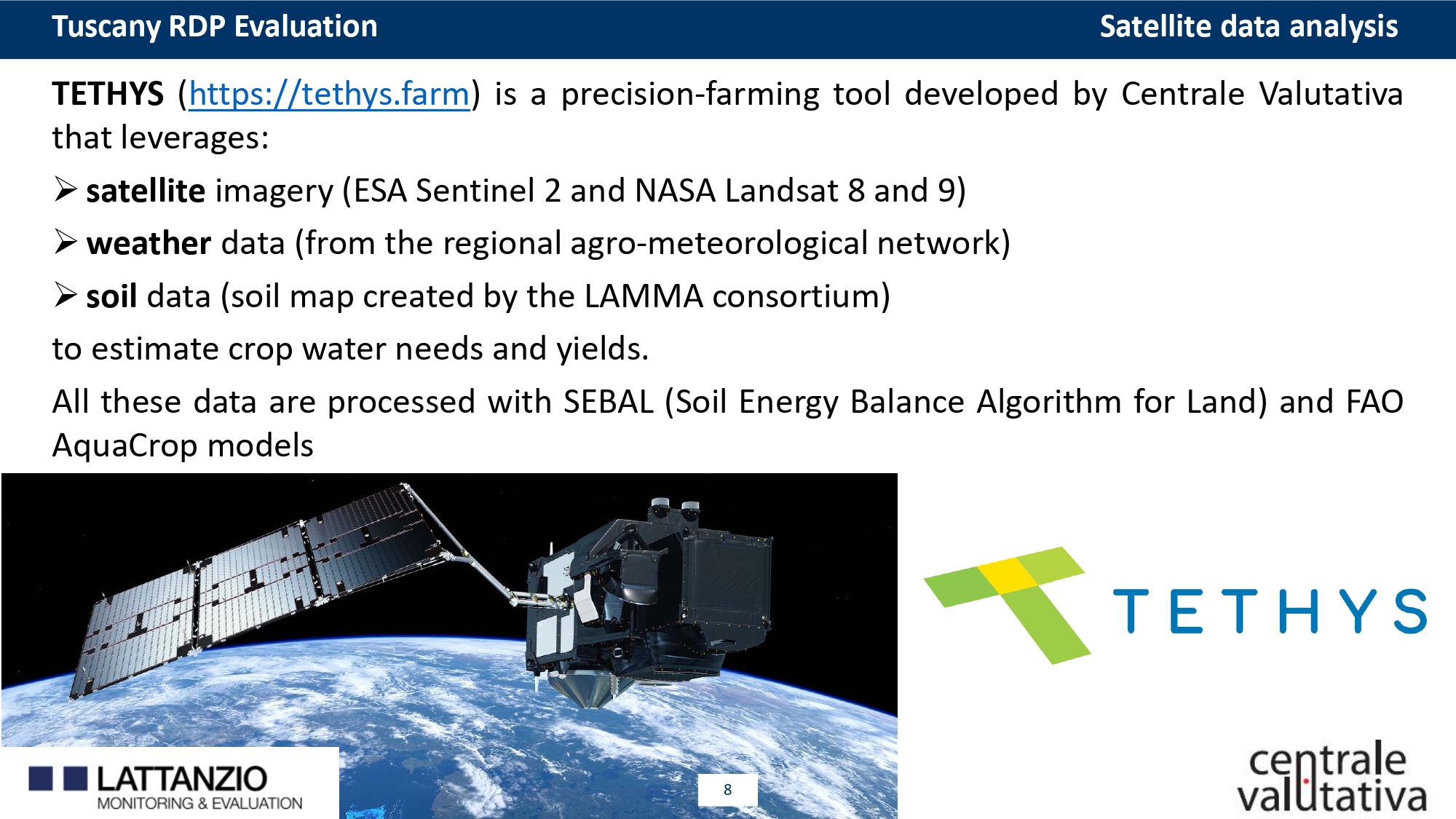
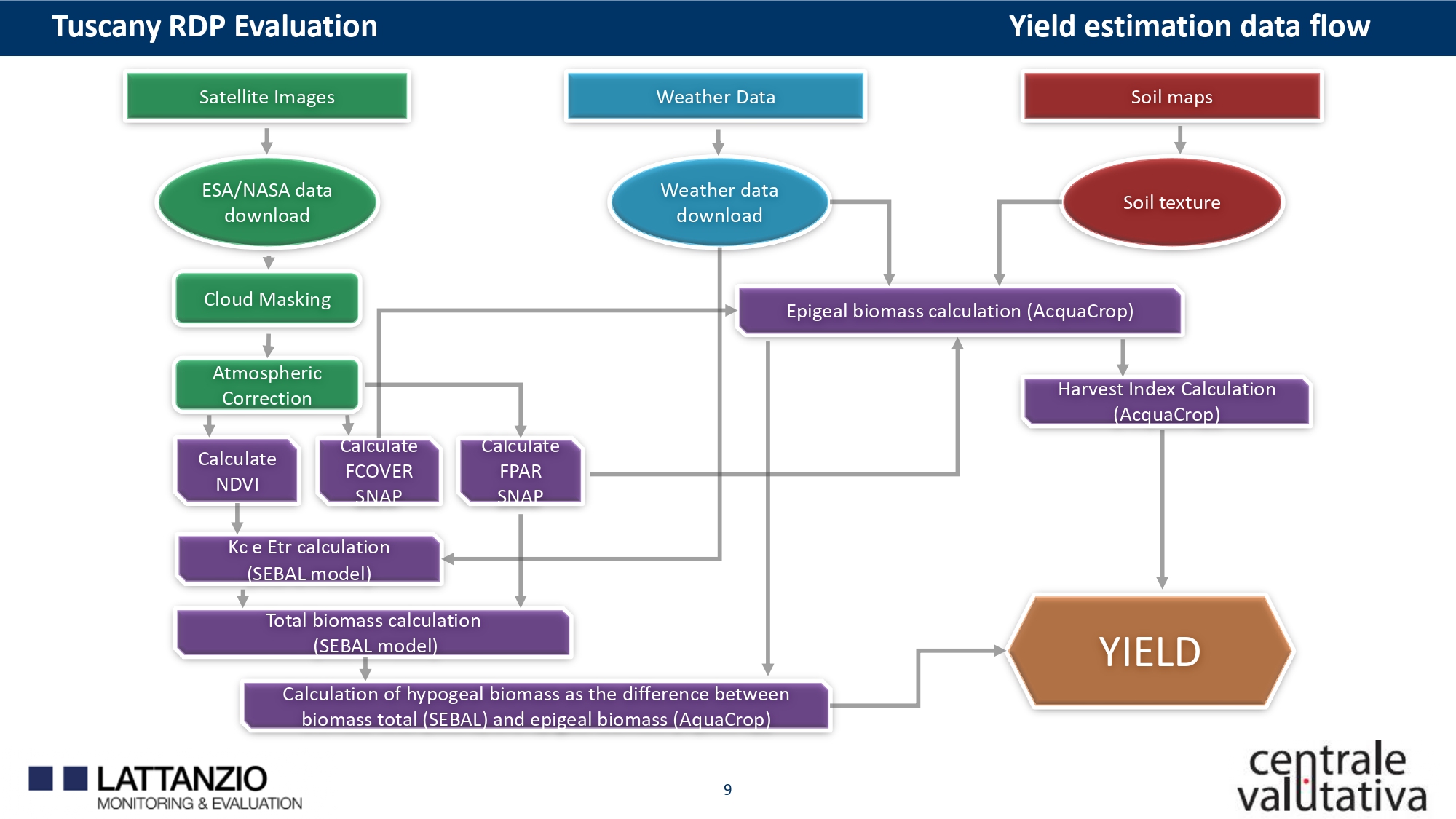
To estimate yields, TETHYS was used, the DSS developed by Centrale Valutativa with the support of the European Space Agency, which integrates images from ESA's Sentinel-2 and NASA's Landsat 8 and 9 satellites with meteorological information and data relating to soil characteristics.
Through the FAO SEBAL and AquaCrop models, the system has allowed to process the available information and calculate the yields of the different crops, providing a quantitative basis for comparison between production methods.
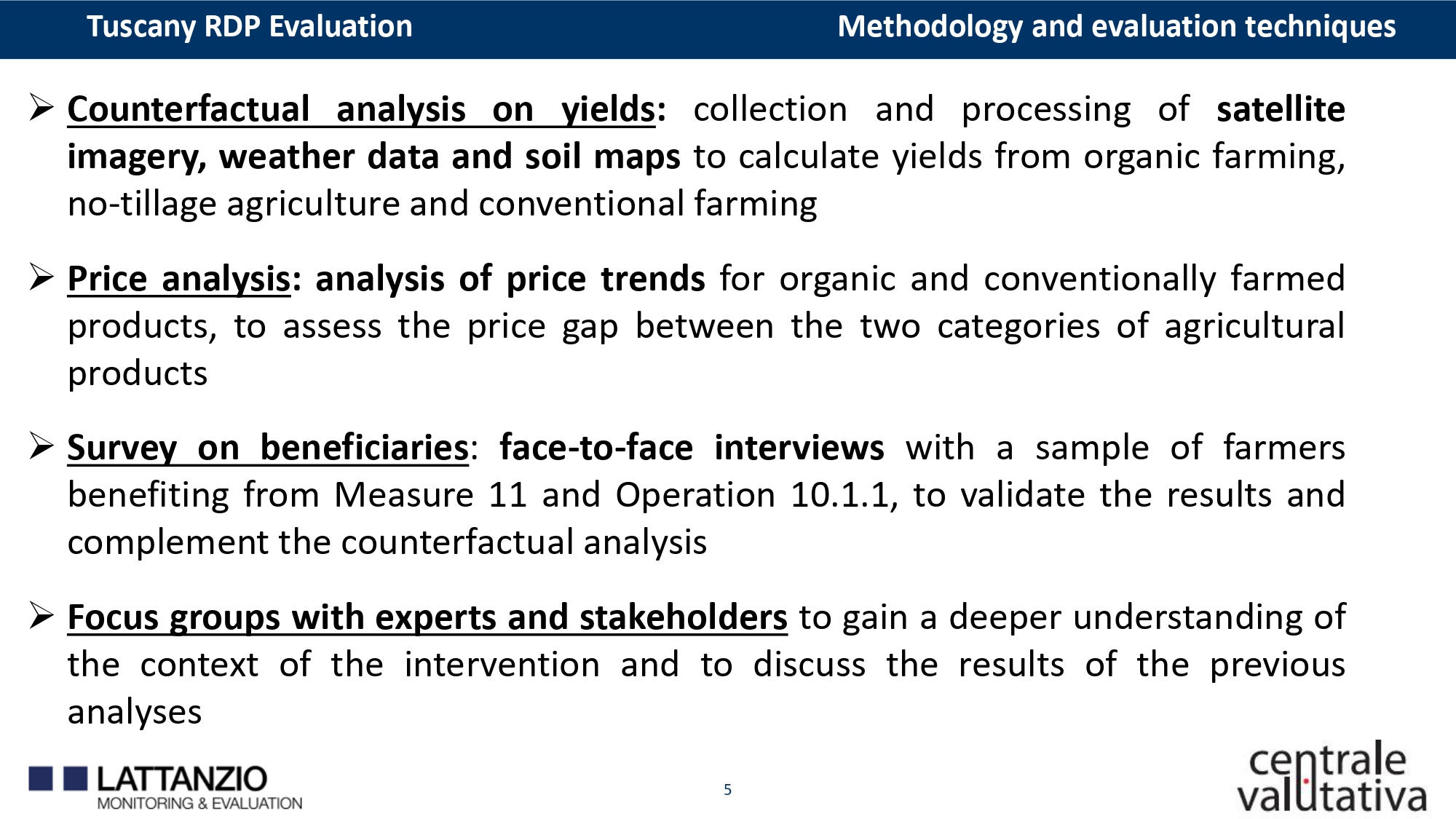
The elaborations were integrated with the analysis of market prices, interviews with farmers and moments of discussion with experts and stakeholders, so as to build an evaluation that took into account both production results and the economic context.
The results and implications for supporting organic farming
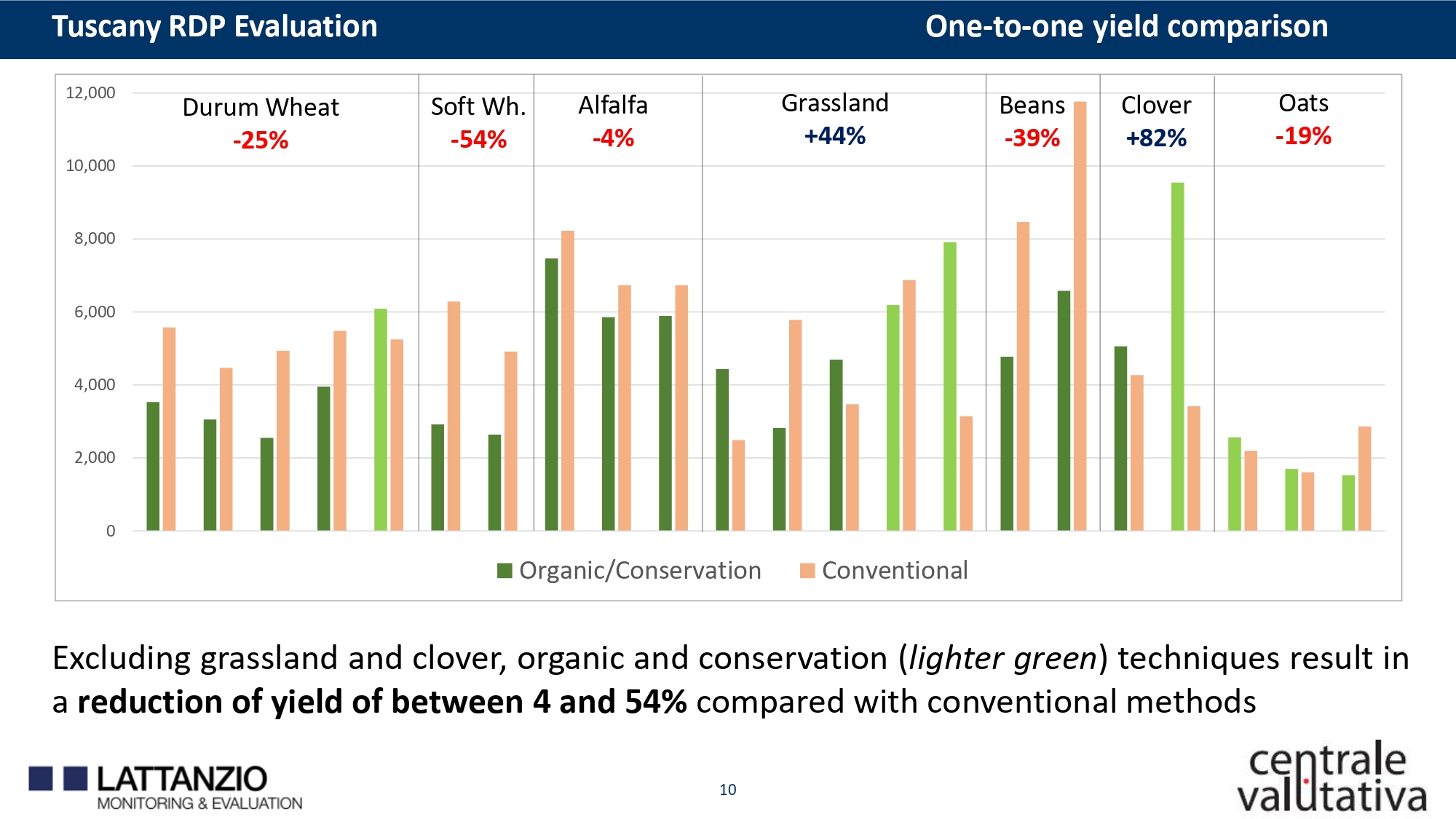
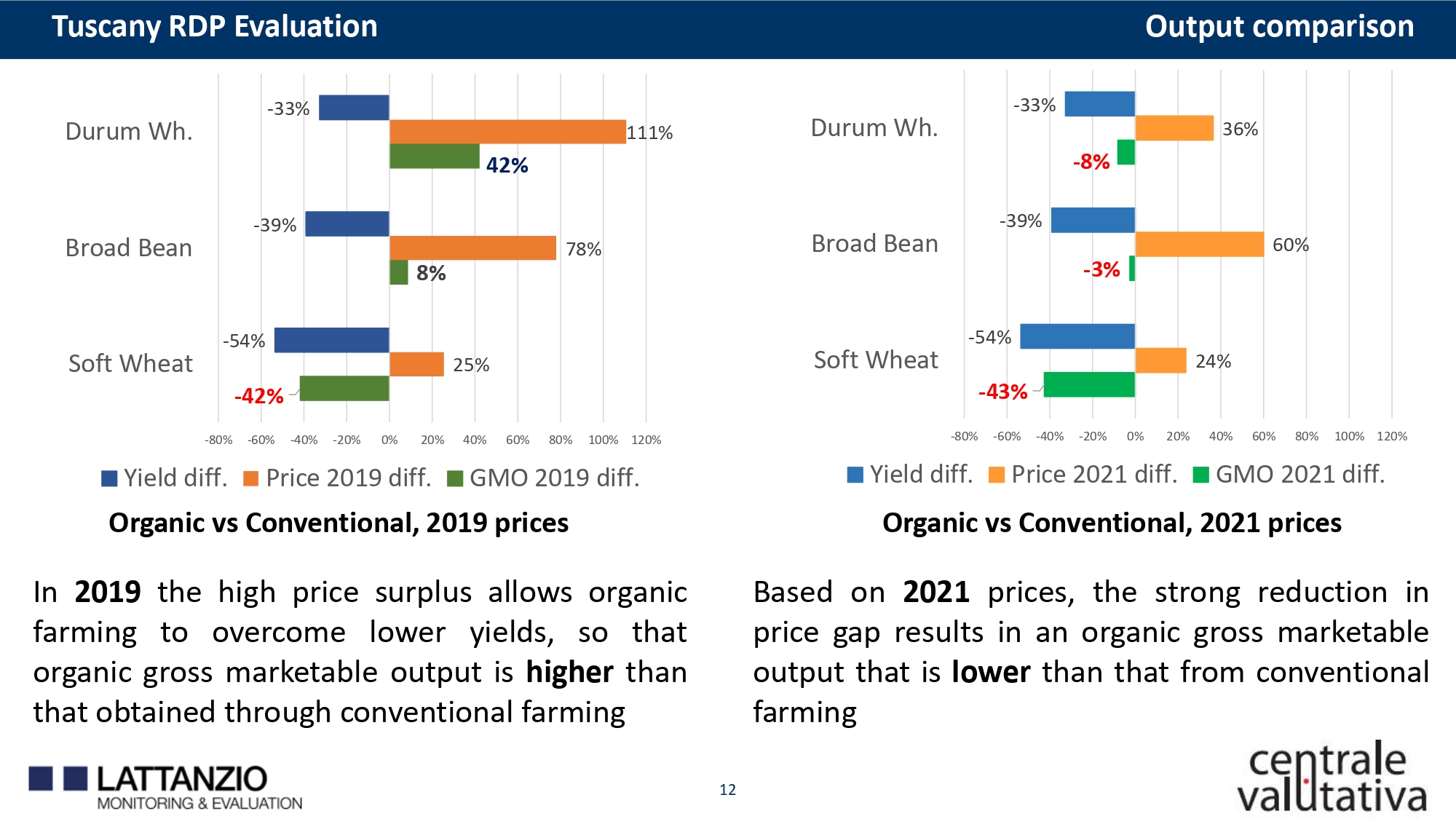
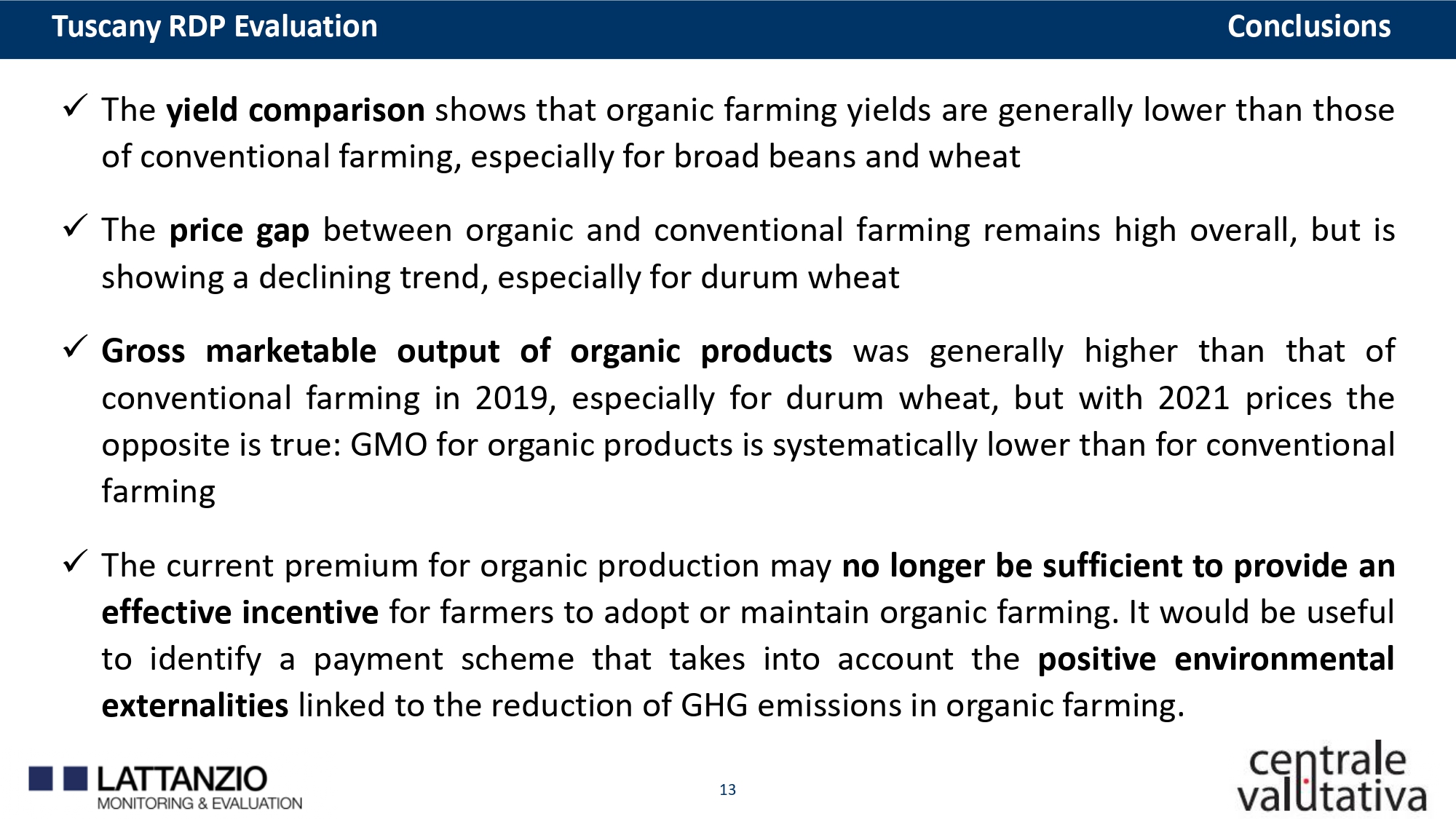
The analyses highlighted that, for most of the crops examined, the yields obtained with organic and conservative methods are lower than those of conventional agriculture, with differences between the 4% and the 54%.
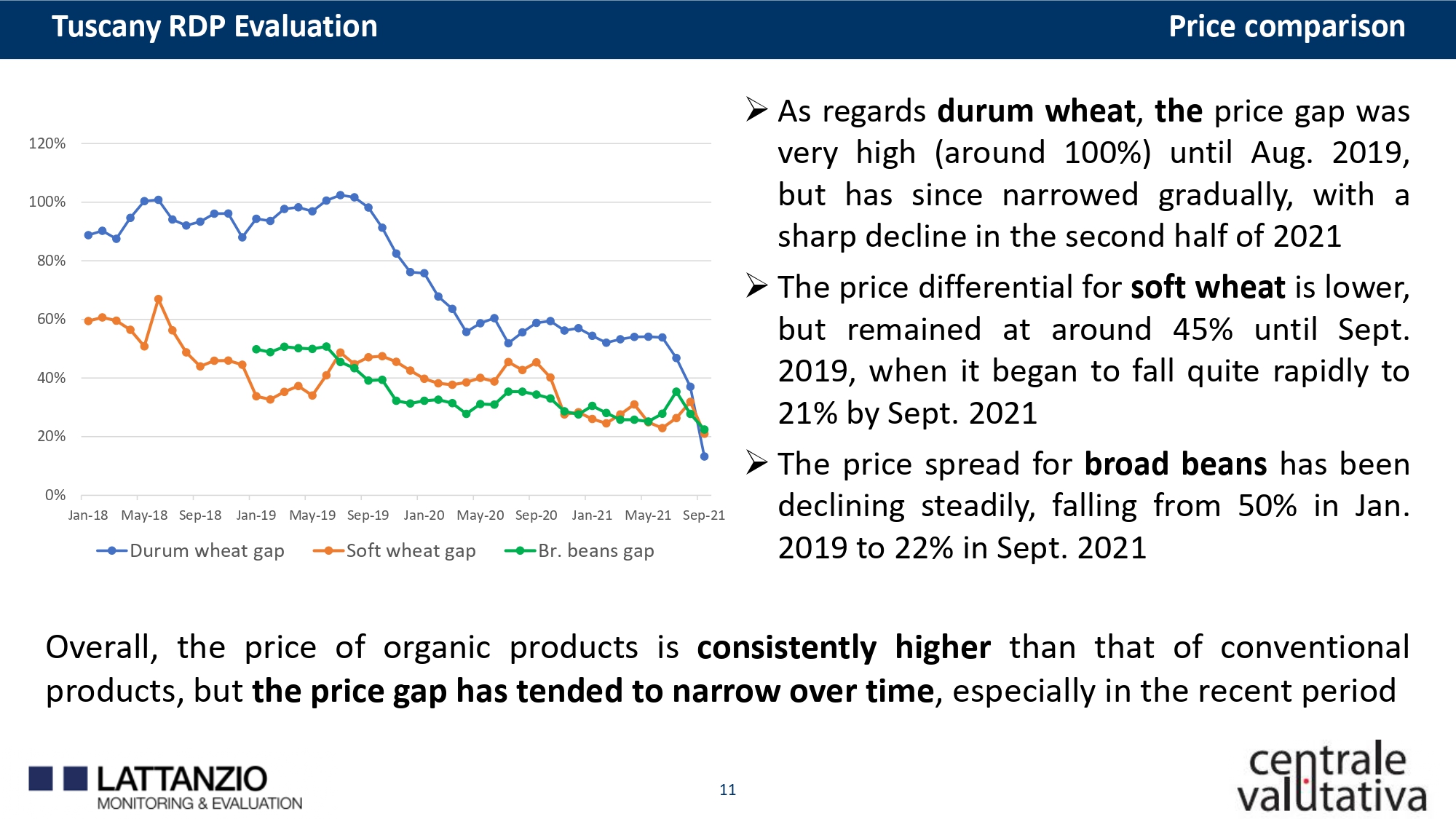
However, the economic comparison revealed a more complex picture. In 2019, the higher market price of organic products generally offset lower yields, resulting in a higher gross saleable production value than conventional products. In 2021, with the progressive reduction of the price differential, this situation reversed.
This is a significant result for the evaluation of agricultural policies, as it highlights how the premium paid to organic production may no longer be sufficient to incentivize farmers to adopt or maintain this production method.
The evidence emerging from the study was used by the Tuscany Region to adapt its support tools, increasing the premium allocated to organic farming in the next Community programming period.
From satellite data to agricultural policy decisions
The experience presented in Vilnius demonstrates how the use of Earth observation data can extend from daily crop management to the evaluation of public policies.
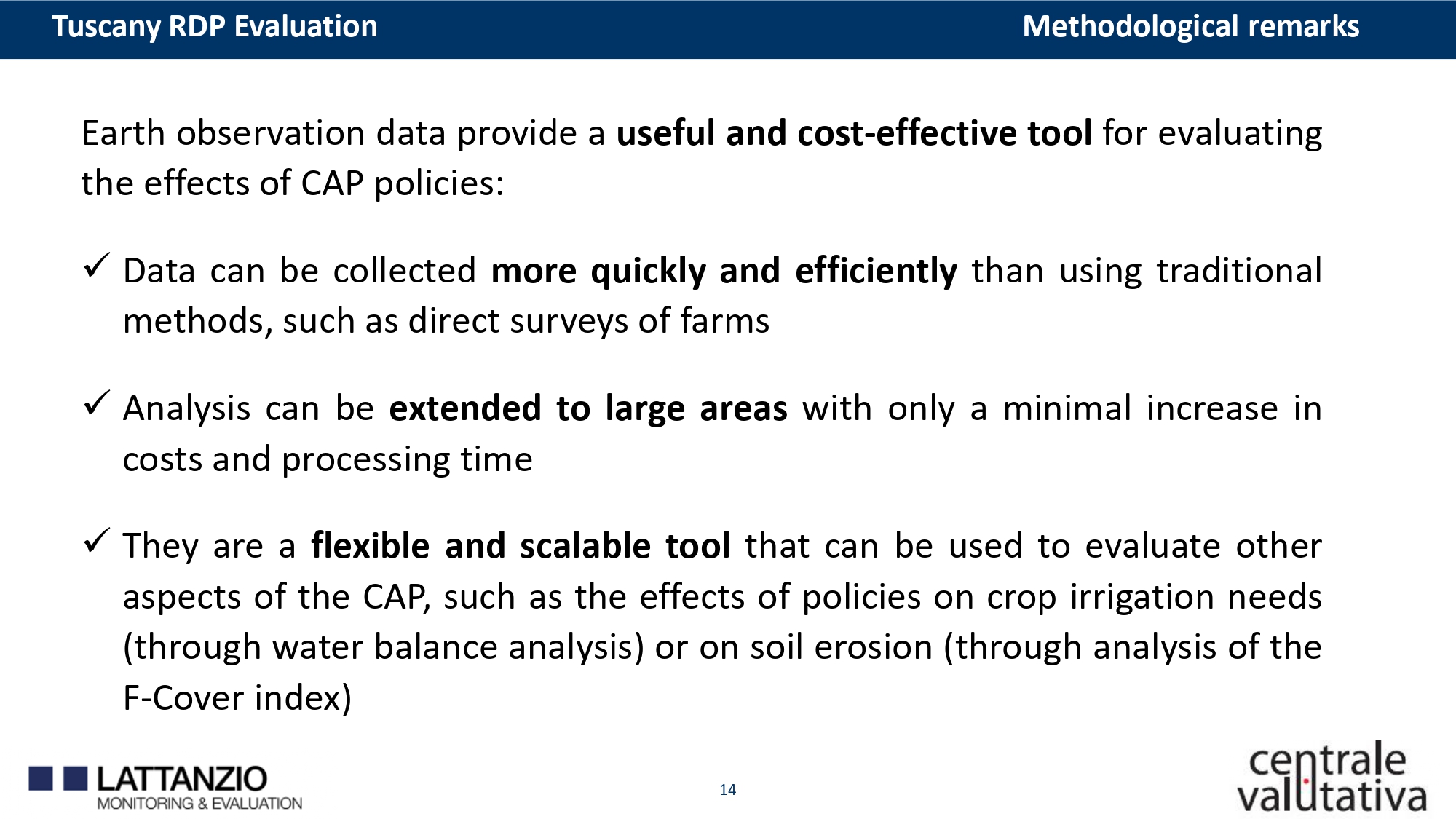
The ability to collect information rapidly, analyze large areas at low cost, and compare results over time represents a significant opportunity for governments called upon to measure the effectiveness of Common Agricultural Policy (CAP) interventions.
For TETHYS, this is further confirmation of the system's versatility: the same tools used to monitor crop growth, estimate irrigation needs, and evaluate yields can help develop more effective agricultural policies based on objective and measurable results.