

The summer of 2026 is forcefully bringing back to the centre of attention a theme that is now structural for agriculture: crop management in high temperature conditions, irregular rainfall and increasingly scarce water availability.
Summer 2026: Heat and drought will test agriculture
THE data available for June and July provide a particularly significant picture. According to the Copernicus Climate Change Service, June 2026 It was the second warmest June on record in Europe since 1979 and the hottest ever for Western Europe. In this area, the average temperature reached 20.7°C, an anomaly of +3.1°C compared to the 1991-2020 average. In Italy, as in much of continental Western Europe, the month was characterized by drier-than-average conditions.
TO July Warm weather continued in many parts of Western Europe. Considering June and July together, the average temperature in Western Europe was 21.6°C, 2.8°C above the 1991-2020 average, the highest value recorded for this two-month period since 1979. During the same period, drought conditions already present in several areas persisted or worsened: in July, much of Western Europe and large parts of Central Europe experienced drier-than-average conditions and, in some regions, exceptionally low soil surface moisture levels.
It is important to point out that, at the time of writing, August has not yet ended and therefore a definitive climate balance for the entire summer of 2026 is not available. However, the consolidated data for June and July are sufficient to highlight a condition that agriculture has to deal with more and more frequently.
Drought in agriculture: from emergency management to planning
Drought in agriculture, like heatwaves, can no longer be treated solely as a seasonal emergency. High temperatures and uneven rainfall patterns directly impact crop water needs and complicate determining when and how much to irrigate.
The question then becomes management: don't wait until stress is evident, but have the information you need to intervene sooner.
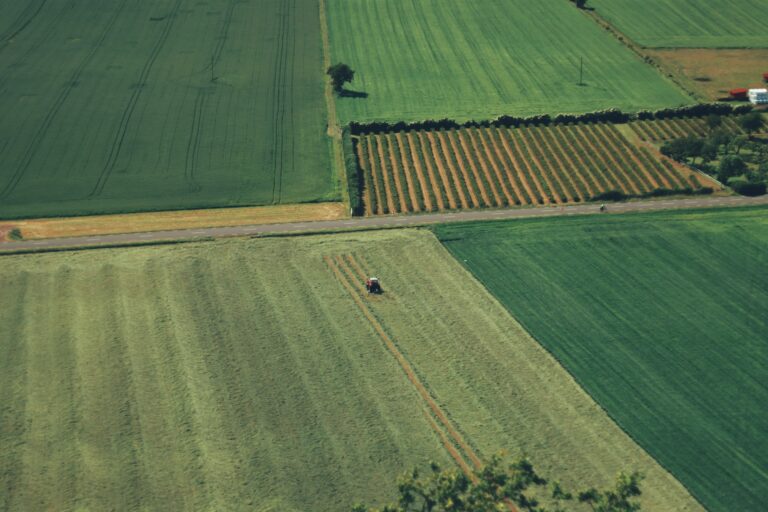
What happens to crops during heat waves
When temperatures remain high for prolonged periods, increases evaporative demand of the atmosphere and, consequently, the amount of water lost from the soil-plant system through evapotranspiration.
If the water availability in the soil is not sufficient to compensate for these losses, the plant puts into action a series of defense mechanisms. Among these is the stomata closure, through which transpiration and therefore water loss are limited.
This response allows the plant to protect itself from dehydration, but also involves a reduction of gas exchange and photosynthetic activity. If the situation continues, the effects can affect vegetative development, biomass accumulation and, depending on the crop and phenological stage, the quantity and quality of production.
The relationship between heat and water availability This is particularly important. Copernicus emphasizes that high temperatures increase water loss from soil and vegetation through evapotranspiration; as soil moisture gradually decreases, evaporative cooling also decreases, further contributing to rising temperatures.
In these conditions, therefore, Indiscriminately increasing irrigation volumes is not necessarily the most effective response. Instead, it becomes essential to know the state of the crop and the water balance to establish irrigation times and quantities in relation to actual needs.
Why traditional irrigation models show their limitations
For many years, irrigation decisions were based primarily on the farmer's experience, direct observation of the field, and pre-defined rotations.
Experience remains an essential component of agronomic management, but in the presence of highly variable weather conditions it may not be sufficient to understand what is happening within the entire plot.
Two areas of the same field can in fact react differently to the same weather conditions due to soil characteristics, vegetation development, water availability or other agronomic factors.
Then there is another problem: when the crop's suffering becomes clearly visible, stress is already underway.
For this reason irrigation management can benefit from tools capable of observing the evolution of crops over time and provide actionable information before a criticality becomes a visible problem and potentially a production loss.
From satellite data to irrigation management
It is in this transition from reaction to prevention that Agriculture 4.0 can offer a concrete contribution.
By processing the data acquired from the Sentinel-2 and Landsat 8 and 9 satellites, TETHYS allows you to monitor plots throughout the entire growing cycle without requiring the installation of sensors or other hardware in the field.
Satellite images allow us to systematically observe large areas and to compare both different areas of the same plot and the evolution of vegetation over time.
The data thus becomes a tool to support agronomic decisions: it does not replace the experience of someone who knows the field, but it adds a level of information that would be difficult to obtain through direct observation alone.
TETHYS WATCH and AQUA for monitoring and planning
Inside the platform, TETHYS WATCH It allows you to monitor the vegetative state of crops through the processing of satellite data.
The vegetation indices They allow for the analysis of parameters related to the vigor and development of the crop and to highlight any differences within the plot. The analysis of time series also allows for the comparison of the evolution of the different areas and for identify anomalies which deserve further investigation in the field.
Monitoring is supported by TETHYS AQUA, the module dedicated to irrigation management.
AQUA acquires information about crop and weather conditions for prepare a daily water balance and to provide therefore indications on the quantity of water needed and the best time to irrigate, with a schedule for the next four days.
In this way irrigation can be programmed based on the actual crop needs, avoiding both insufficient contributions and distributions that are greater than necessary.
Using TETHYS AQUA can allow a water savings greater than 40%, transforming water from a resource managed primarily in response to emergencies to a variable that can be monitored and planned over time.