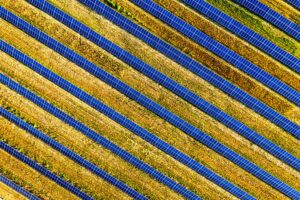


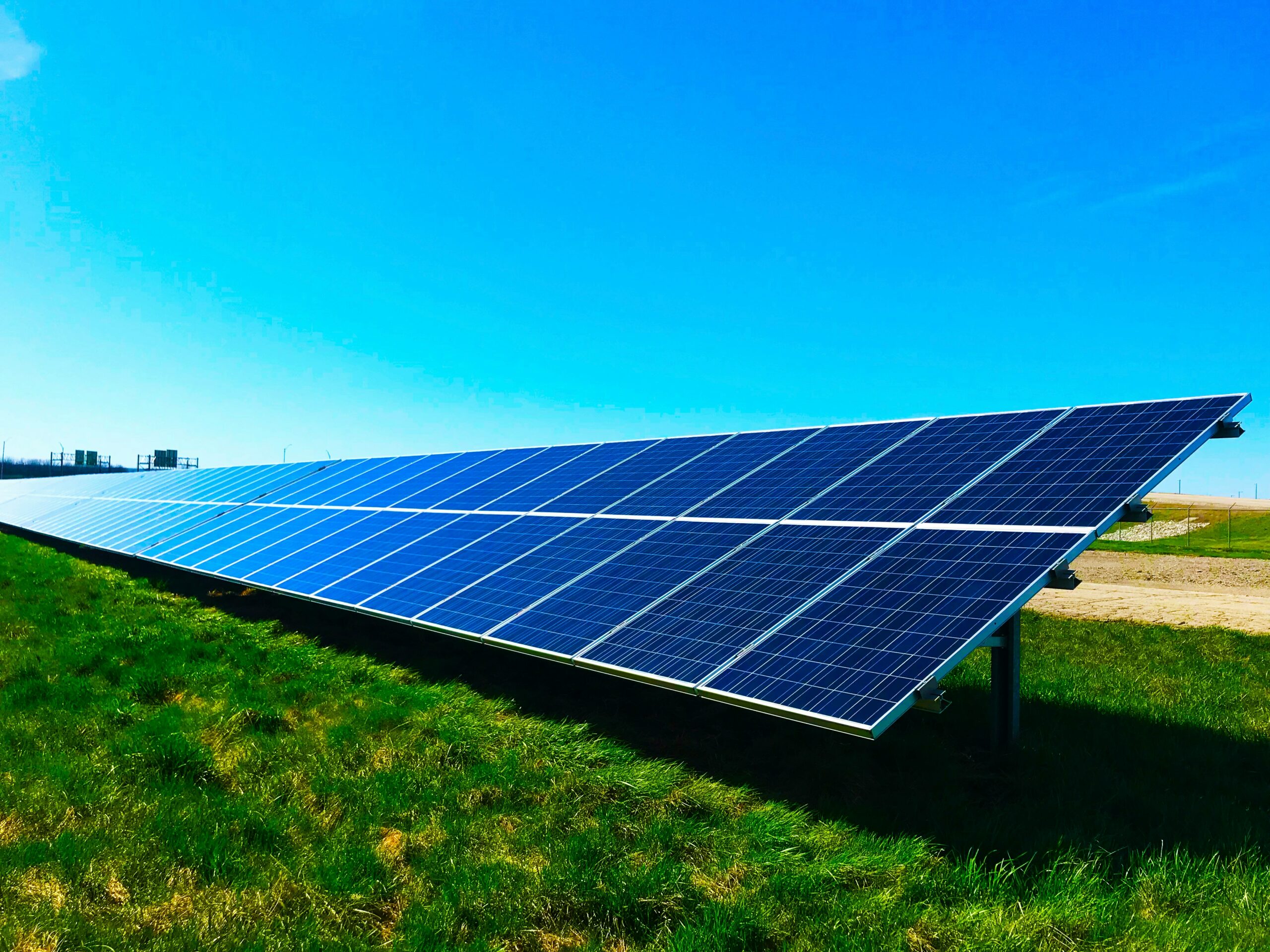
The continuation continues collaboration between TETHYS and Syniergy for the development of a new model of advanced agrivoltaics (A-FTV), traceable, efficient and sustainable. After the'Integration of the TETHYS DSS system in the design and monitoring processes, the first results arriveex ante satellite analysis conducted on an agricultural area in the province of Bologna, intended for the installation of an agrivoltaic system with mobile trackers.
An objective snapshot of the agricultural potential before planting
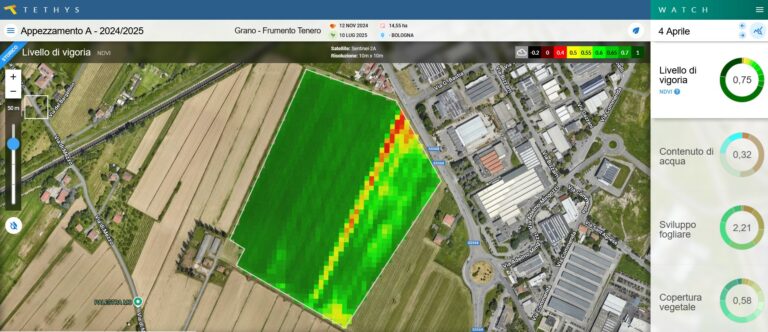
Through the DSS TETHYS system and its integrated modules – WATCH, WATER And GROW – it was possible to precisely reconstruct the production status of the area undergoing intervention before the construction of the plant. The analysis highlighted a agricultural production below potential, with poorly productive crops, also due to the lack of an efficient irrigation system, essential to sustain production in the summer months.
Satellite data, processed in combination with environmental models and weather data, have allowed us to track thetrend of vegetative vigor, the biomass production and then the CO₂ absorption capacity. This information provided a solid starting point for objectively evaluate the pre-existing agronomic value and measure the expected improvement delta.
A double agricultural and energy valorization
The planned intervention includes the construction of an agrivoltaic system with mobile trackers, designed to guarantee the continuity and coexistence of agricultural activitiesPrecisely by virtue of the preliminary monitoring, it will be possible to define an agronomic plan suited to the context, maximizing the available surfaces even in the presence of photovoltaic modules.
Despite a projected reduction in utilized agricultural area (about 25%) and a decrease in solar radiation estimated between 30 and 35%, the simulations conducted indicate an increase in overall agricultural profitabilityThe compatible cropping plan developed with the support of TETHYS includes the introduction of high-value crops, such as industrial tomatoes, which are particularly suited to the area in question.
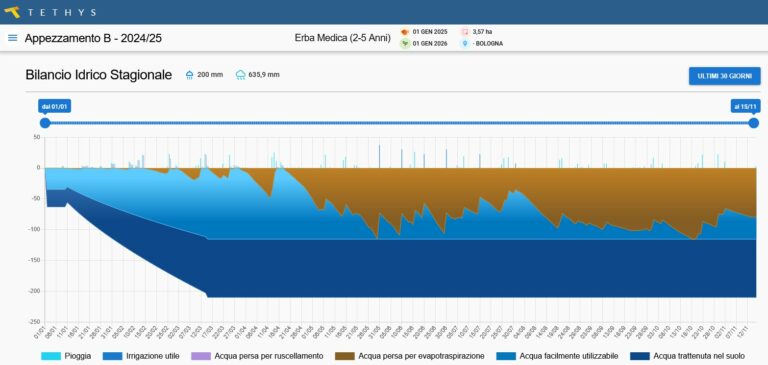
Added to this is the positive effect of installing a new irrigation system, made possible by the investments planned within the project. The possibility of manage irrigation volumes in a targeted manner – also through the daily monitoring of water balance – will contribute directly to theincreased yields and to theoverall production efficiency.
Greater agricultural value, environmental stability
In addition to the economic aspects, the analysis conducted confirmed that the introduction of theThe agrivoltaic system will not have any negative effects on the CO₂ absorption capacity of cropsOn the contrary, thanks to the greater management efficiency and the possibility of maintaining agricultural continuity in the presence of the modules, it will be possible ensure stable and measurable agricultural production over time, in line with the sustainability criteria set by current legislation.
The increase in irrigation use will be limited and controlled, but sufficient to fill existing gaps and support the production of new crops.
A collaboration to serve operational and transparent agrivoltaics
TETHYS continues to work alongside Syniergy, which coordinates the project development of this A-FTV intervention, to bring into play a truly integrated agrivoltaics, capable of generating measurable agricultural benefits, ensuring transparency in impact assessment and responding to the needs of the stakeholders involved.
This example demonstrates how satellite monitoring applied to agronomic planning is not just a support element, but a strategic lever for planning more efficient investments, sustainable and consistent with the needs of the territory.