


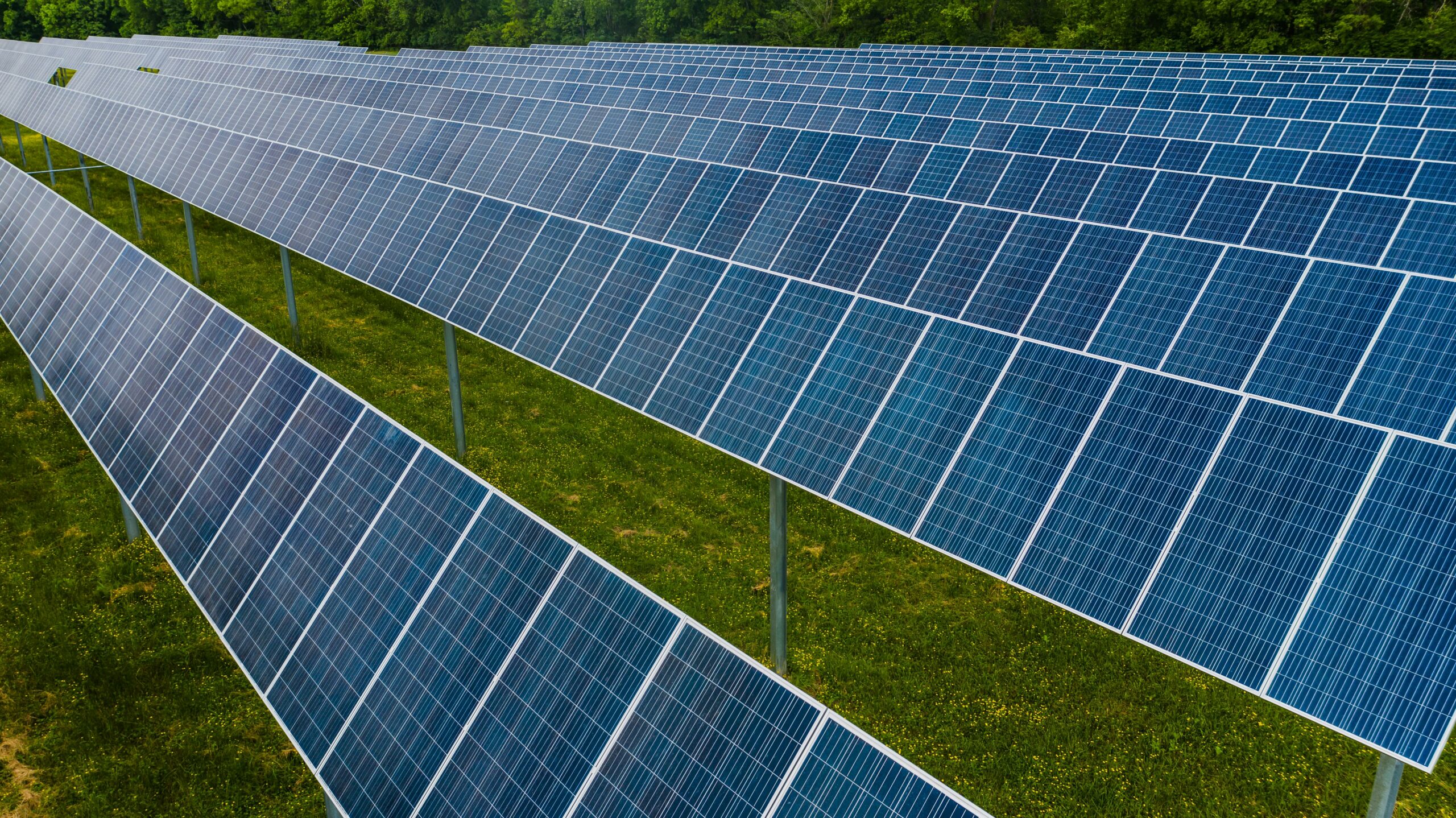
From 4 to 6 March 2026, Rimini will host Key Energy, thereference event for the world of energy transition, which brings together every year operators, designers And companies involved in the development of renewable energy at the Rimini Expo Centre.
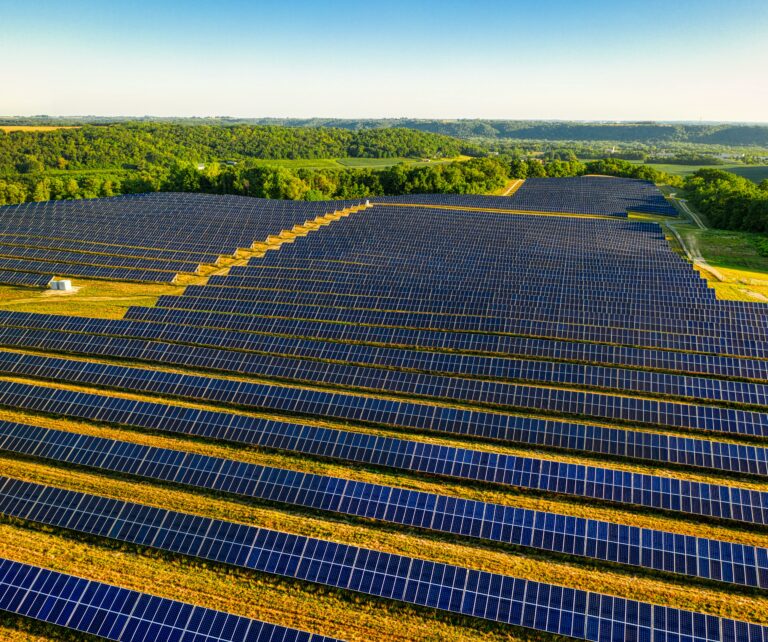
It is in contexts like this that the comparison on agrivoltaics it gets more done dense and, at the same time, more complex. Because if on the one hand the technology is now mature and the plant solutions continue to evolve, on the other it is becoming increasingly evident that thea real challenge it's not just about the energy produced, but the way agriculture is integrated, read and demonstrated over time.
Beyond the structures, the agricultural question
In recent years, agrivoltaics has often been described as a response capable of combining energy production and agricultural land use. However, as the number of projects and areas involved increased, it became clearer a question that goes beyond technical feasibility.
As it is demonstrated, over time, that an agrivoltaic system continues to be truly agricultural as well, and not only formally compatible with a cultivation activity?
This question cannot be answered in a single assessment or in a photograph taken in a single season. Rather, it requires the ability to observe slow processes, progressive adaptations And crop responses that are built over the years.
Authorizations and the need for objective evidence
In the authorization procedures, agriculture is increasingly called upon to provide evidence, not only qualitative descriptions. You are asked to rebuild the productive state of the land, to demonstrate it the agricultural vocation and to credibly evaluate how this could evolve once the system is installed.
In this passage, data plays a central role because it allows you to transform the agronomic experience on a shared and comparable basis. Thehistorical analysis of agricultural performance in fact it allows us to understand how a plot has worked in previous years, what dynamics were already present and what variations fall within normal crop variability.
This type of reading becomes essential to avoid simplifications and to build more solid assessments, capable of distinguishing between what is structural and what is contingent.
Agricultural continuity as an observable process
Talking about agricultural continuity means accepting that there are no shortcuts. continuity it is not a static data, but a process that needs to be observed over time, season after season.
The satellite monitoring allows you to follow the vegetative progress throughout the entire agricultural cycle, also on large surfaces and in the presence of systems equipped with mobile tracker modules. This observation continues reduces uncertainty and allows you to compare different periods, different areas and non-homogeneous growing conditions.
In the agrivoltaic context, this approach allows us to understand whether crops they are maintaining their production capacity, if they are modifying one's behavior and to what extent these variations are attributable to the system or other factors.
Water and microclimate, signals that emerge over time
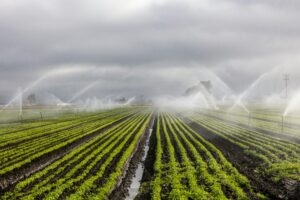
Among the variables more sensitive in agrivoltaic systems, water plays a central role, often underestimated in the initial stages of the project. Shading And microclimate modified directly impact on the irrigation needs and on thewater balance of crops, making estimates based on standard parameters less reliable.
The daily water balance calculation allows you to read more precisely what is happening in the soil and in the plant, intercepting stressful situations or of excess which do not always produce immediate effects, but which can impact productivity in the medium term.
In this sense, the water saving it's not just a goal, but a useful indicator to evaluate the quality of integration between plant and agricultural activity.
Biomass and crop production response
Next to the water, there biomass growth represents another key element for understanding crop responseAnalyzing biomass means going beyond a purely visual reading of vegetative vigor and starting to think in terms of real productivity.
The identification of areas with homogeneous behavior within the plots allows for read spatial differences better, Of estimate production potential and of build more coherent future scenarios.
Even the theme of theCO₂ absorption thus finds a concrete agricultural dimension, linked to crops and their performance over time.
Separate the effect of the system from external events
In agriculture, not all production variations can be traced back to design choicesExtreme weather events such as hailstorms, floods, or periods of prolonged stress can significantly affect crop performance.
The possibility of correlate agricultural data over time with specific weather events allows us to reconstruct more objectively seasonal dynamics, distinguishing the impact of the agrivoltaic system from that of external factors. This type of reading is increasingly relevant both in authorization scope is in risk management.
From the methodological approach to operational experiences
This modus operandi It does not arise in the abstract. In recent years it has been applied in real contexts through operational collaborations with companies active in the design and construction of renewable energy plants, like Synergy And RP Global.
In the case of Synergy, thedata usage has allowed us to reconstruct in some concrete cases the historical agricultural trends, analyze irrigation needs, evaluate biomass growth And compare the current scenario with the projected one, transforming the data into a tool for reading and dialogue between different skills.
A comparison that looks to the long term
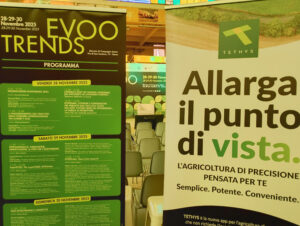
The presence of TETHYS at Key Energy 2026 is part of this observation and comparison pathAt a time when agrivoltaics is called upon to demonstrate its agricultural as well as energy sustainability, the real challenge it's not accumulating information, but build reliable methods to read them over time.
It is on this ground, made of data, observation And responsibility, which plays an important part in the future of agrivoltaics.




Add comment
You must be logged in to post a comment.