


2025 was a year for TETHYS year of consolidation thanks to the implementation of an approach that in previous years had placed methodological bases very precise, deriving from theuse of satellite data as an operational tool, capable of accompany real, measurable and verifiable decisions and actions over time.
In an agricultural context increasingly exposed to climate variability, at the pressure on water resources and to the need to reconcile production and sustainability, the work done in 2025 revolved around a key question: how to make the data useful, readable and integrable into daily agronomic practice.
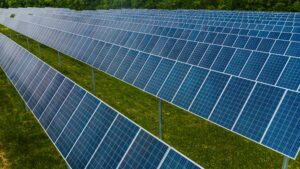
Agrivoltaics: From Debate to Conscious Design
In 2025 theagrivoltaic It was one of the most present themes in the comparison with operators, technicians and designers, no longer as an abstract concept or as a promise, but as complex system that requires method, data and monitoring continuity.
The collaborations started and developed during the year – in particular with Synergy And RP Global – marked an important step: agrivoltaics approached as a complete process, from the authorization phase to operational management.
L'integration of the TETHYS DSS into the project paths It allowed us to work on three fundamental levels:
• Analyses ex ante of the agricultural and environmental potential of the sites
• Definition of cultivation plans compatible with the layout and microclimate of the plants
• Monitoring continuous agricultural activity throughout the operational life
The value was not so much in the single metric, but in the ability to demonstrate, with objective data, agricultural continuity, water efficiency and environmental sustainability of the plants.
A decisive step to transform theagrivoltaic from subject of debate to measurable agricultural infrastructure.
The role of water and continuous monitoring
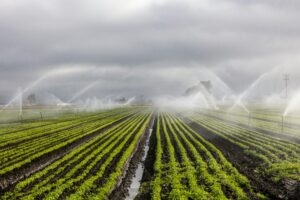
L'waterfall it is the red thread which has gone through all the activities of 2025.
Over the course of the year it has become increasingly clear how the water management you represent one of the main risk factors – but also of optimization – for agricultural systems and it is in the research project on kiwifruit decline that this approach has found its most mature application.
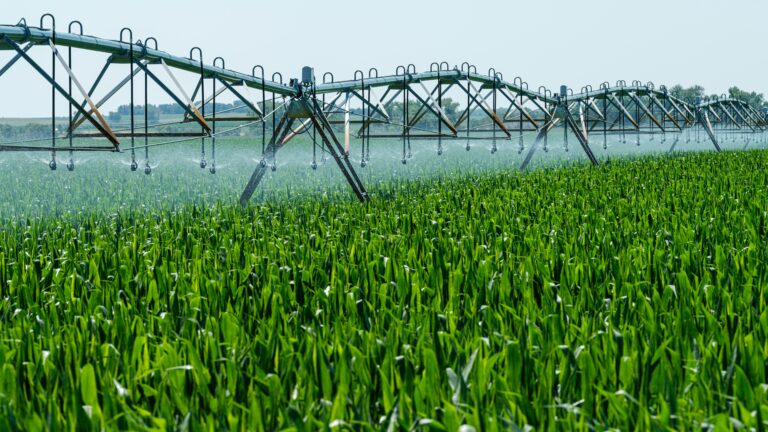
The continuous monitoring of the irrigation needs, evapotranspiration and soil moisture allowed us to identify situations of overirrigation and potential water stagnation, without highlighting immediate vegetative problems, but providing fundamental indications for the prevention of root stress.
The experience gained in kiwi die-off project has strengthened the awareness that Without objective and continuous water control, it is not possible to evaluate either the sustainability or the effective agricultural continuity of production systems..
Kiwi die-off: a project entering its crucial phase
In 2025, the kiwifruit decline project, which began in 2023, consolidated its operational framework.
After the initial phases of starting up and validating the method, the work focused on the integrated reading of the results, by relating vegetative growth, agronomic management and environmental conditions observed in the different plots.
The continuous comparison with producers and with scientific partners has allowed us to refine the analysis and to clarify which signals deserve attention over time, distinguishing the physiological variations from those potentially critical.
This step was central to strengthening theproject goal: not to identify a single cause of the deaths, but build tools useful for prevention, based on objective observations and comparable over time.
2025 therefore represented a turning point: from a monitoring project to operational base for the development of predictive tools, which will guide the activities of 2026.
From the field to space, and back again
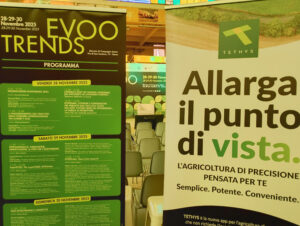
Participation in moments of discussion such as EVOO Trends and NSE – New Space Economy represented a further level of interpretation of the work carried out in 2025.
In different but complementary contexts, the same need clearly emerged, that is, transforming technology into a reliable tool, capable of talk to those who work in the field.
Give the understandable, verifiable and useful data it is, in fact, a shared responsibility between the world of space applications and the agricultural world.
2025 confirmed that this bridge is not only possible, but necessary.



Add comment
You must be logged in to post a comment.