


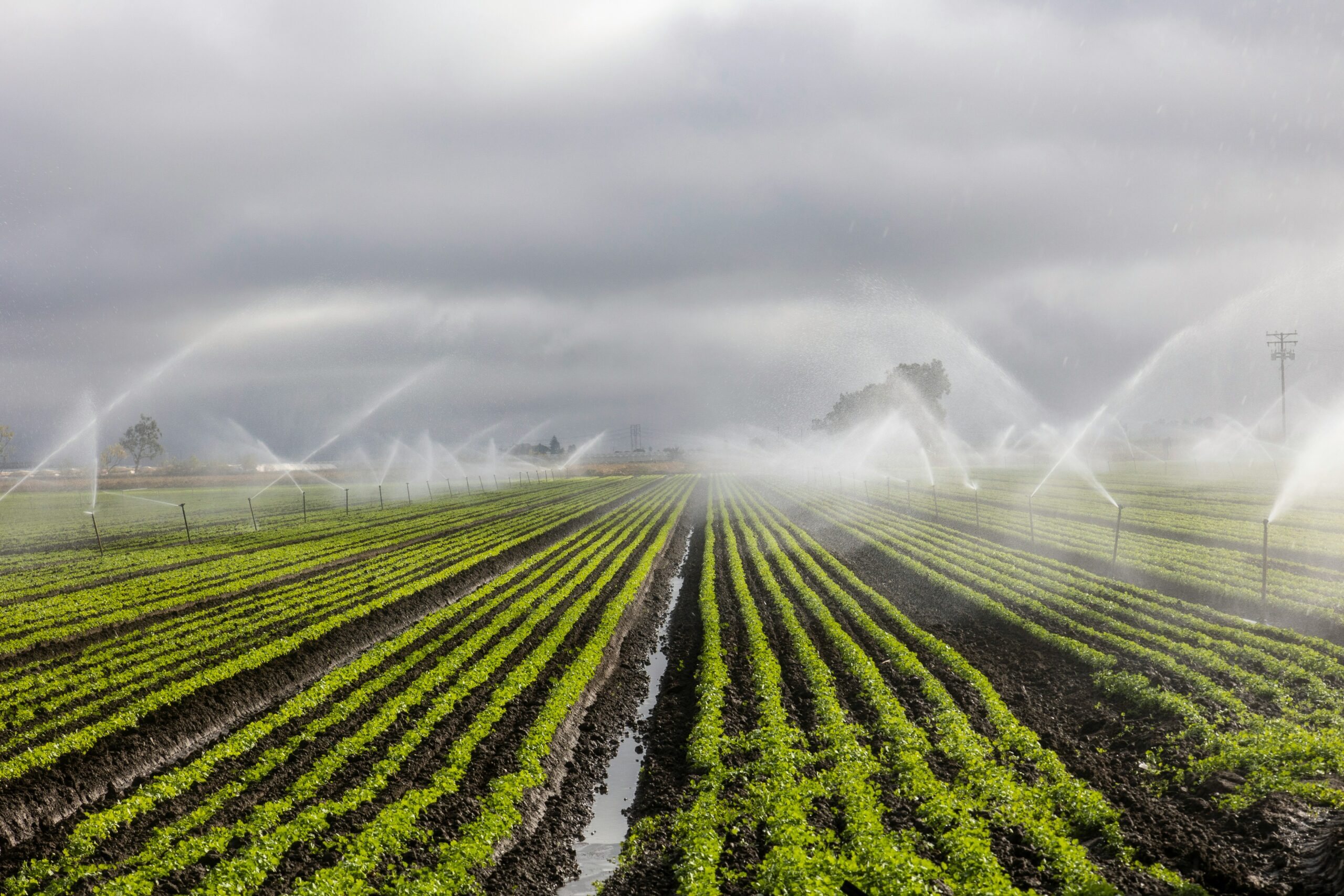
For decades, in many parts of the world, thewaterfall continued to flow in irrigation canals, to feed agricultural systems and to support increasingly intensive production. Even where resources were starting to show signs of stress, the dominant perception was that of a temporary crisis, which can be addressed with emergency interventions or new infrastructures.
Today this picture no longer holds up.
With the introduction of the concept of global water bankruptcy, the United Nations they gave a precise name to a structural condition: water use has steadily exceeded the capacity of natural systems to regenerate itIt is not a question of episodic scarcity, but of a consumption of the water capital which cannot be replenished in a timeframe compatible with human, environmental and economic needs.
For theagriculture, this definition marks a profound paradigm shift.
Why water bankruptcy affects agriculture first and foremost
Agriculture is the largest user of freshwater globally, absorbing approximately 70% of overall withdrawals. Furthermore, in many areas of the planet, a significant portion of irrigation depends on groundwater, today among the most compromised water sources.
The water bankruptcy makes clear a often underestimated aspect: a region may appear productive and irrigated, and still be in a condition of water unsustainability if withdrawals exceed the charging capacity over time. In these cases, agriculture is not using a renewable resource, but is consuming reserves accumulated over decades or centuries.
The risk It's not just environmental. It's also economic And productive: agricultural systems built on non-regenerative water bases They are intrinsically fragile, exposed to sudden collapse when water capital is lacking.
Beyond the drought, the end of the "return to normality"
One of the most relevant messages associated with the concept of water bankruptcy is the end of the idea of a “return to normality”In the past, a dry season was followed by a recovery period; today, in many regions, this recovery it doesn't happen anymore.
The skirts they don't recharge, the lakes do not return to historical levels, the wetlands disappear or lose functionality. Agriculture therefore finds itself operating not in a context of temporary crisis, but within new permanent hydrological limits.
This scenario requires a profound review of agricultural strategies because crops, irrigation techniques, investments and policies can no longer be based on historical water supplies that no longer exist.
The question is not how much water there is but how much is left
The concept of water bankruptcy introduces a radically different reading criterion.
The question, in fact, is no longer "how much water falls or flows in a given year", but how much withdrawal is sustainable over time.
In agriculture this means distinguishing between:
• renewable water used within charging limits
• “borrowed” water from the future, through the lowering of water tables or the degradation of ecosystems.
Many agricultural systems Today they work thanks to this second category, Often without a real awareness of the overall water balanceThe water bankruptcy makes this ambiguity explicit and no longer ignorable.
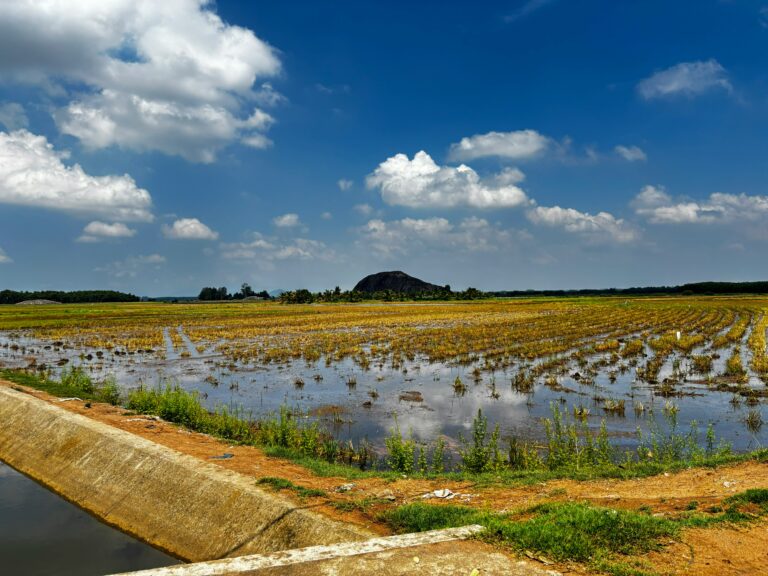
Agriculture and monitoring: without data there is no adaptation
In a context of water bankruptcy, Agriculture cannot rely on rough estimates or late corrective interventionsWater management becomes a matter of continuous measurement.
Know the actual irrigation needs, theeffective evapotranspiration, it soil water status and thevegetative trend of crops is no longer a technical exercise, but a necessary condition to avoid consuming further water capital.
This applies to fruit growing as well as, above all, to extensive cropping systems and for new production models, such as theagrivoltaic, which promise a coexistence between agricultural and energy production but which must be evaluated in light of the real water constraints.
Agriculture as part of the solution
The United Nations report clearly shows that Water bankruptcy cannot be addressed sector by sectorIt's a global condition, interconnected by trade, food flows, migrations And climate dynamics.
In this framework, theagriculture has a particular responsibility, but also a decisive potential.
Reduce waste, improve irrigation efficiency, adapt cultivation practices and base decisions on objective data means contributing not only to business resilience, but also to stability of the territories.
Agriculture, in other words, is not just a victim of water bankruptcy: it is one of the places where you can still reverse the trajectory, if you agree to operate within clear limits.
Growing within new limits
Recognizing water bankruptcy does not mean giving up agricultural production but rather abandon the illusion of infinite water And build production systems capable of lasting over time.
In the near future, the challenge will not be to produce more at all costs, but produce in a way that is compatible with the available water capital, continuously measuring, adapting and correcting choices.
In this sense, water bankruptcy is an invitation to rethink agriculture as an activity deeply linked to the natural limits on which it depends.
And recognizing them today is the first step towards not definitively overcoming them.







Add comment
You must be logged in to post a comment.